Pilgrimage to the Vatican
When you think of iconic Catholic pilgrimage destinations, the Vatican undoubtedly rises to the top.
Steeped in history, culture, and faith, it’s not just the smallest country in the world—it’s one of the most significant. For us Catholics, it’s the sacred heart of the Church, a global center of pilgrimage. A pilgrimage to the Vatican offers an unforgettable journey into the heart of Catholicism, where faith, history, and art converge in one of the world’s most sacred destinations.
Whether you’re religious or not, the Vatican’s blend of beauty, reverence, and artistry offers something deeply moving to everyone who visits.
THIS POST MAY CONTAIN COMPENSATED LINKS. PLEASE READ MY DISCLAIMER FOR MORE INFO.
Each year, millions of pilgrims and travelers make their way to Vatican City. It’s one of the top pilgrimage destinations for Catholics worldwide, and it’s easy to see why. This is the spiritual home of the Catholic Church, the residence of the Pope, and the burial place of St. Peter himself. To stand in these sacred spaces is to connect with something far bigger than yourself—a rich, living tapestry of faith, art, and tradition stretching back over two thousand years.
I still remember my first visit. The moment I stepped into St. Peter’s Square, surrounded by Bernini’s grand colonnades, I felt both small and awestruck. It wasn’t just the architecture—it was the presence, the stillness in the air, the quiet prayers whispered in a dozen different languages. It felt like the whole world had come together, right here.
Let me guide you through your own Vatican pilgrimage—practical tips, must-see sites, and a full day itinerary to help you experience this sacred city to the fullest.
Where Is the Vatican?
The Vatican City is an independent city-state entirely enclosed by Rome, on the west bank of the Tiber River. It covers just over 100 acres, but don’t let its size fool you—within these walls are some of the world’s most sacred and celebrated landmarks: St. Peter’s Basilica, the Vatican Museums, and the Sistine Chapel.
How to Get to the Vatican
Getting here is simple, especially if you’re staying in central Rome.
- Metro: Take Line A to Ottaviano – San Pietro, a 10-minute walk from St. Peter’s Square.
- Bus: Bus 64 or 40 from the Roma Termini stop nearby. Bus 49 drops you right in front of the Vatican Museums.
- Train: The Roma San Pietro station is a short walk from the Basilica.
Tip: If you’re planning to visit early in the morning, public transport can be crowded. Allow extra time, and consider walking if you’re staying nearby.
What to See on Your Pilgrimage to the Vatican
Here are the key stops for any pilgrim—or traveler—in the Vatican:
1. St. Peter’s Square
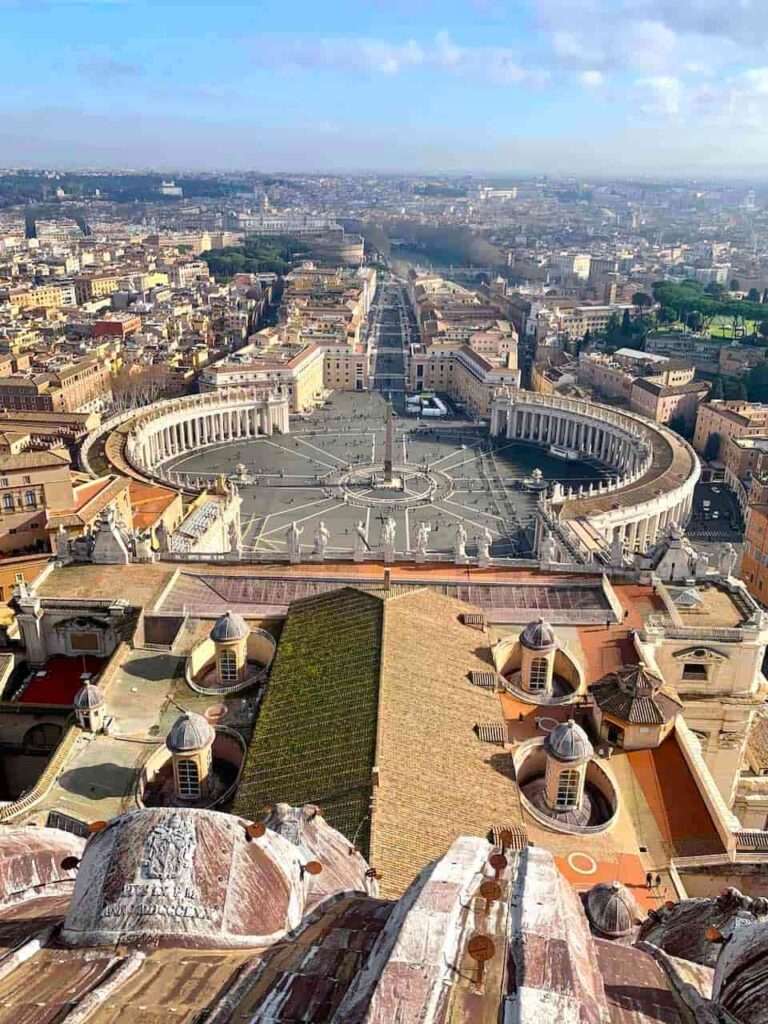
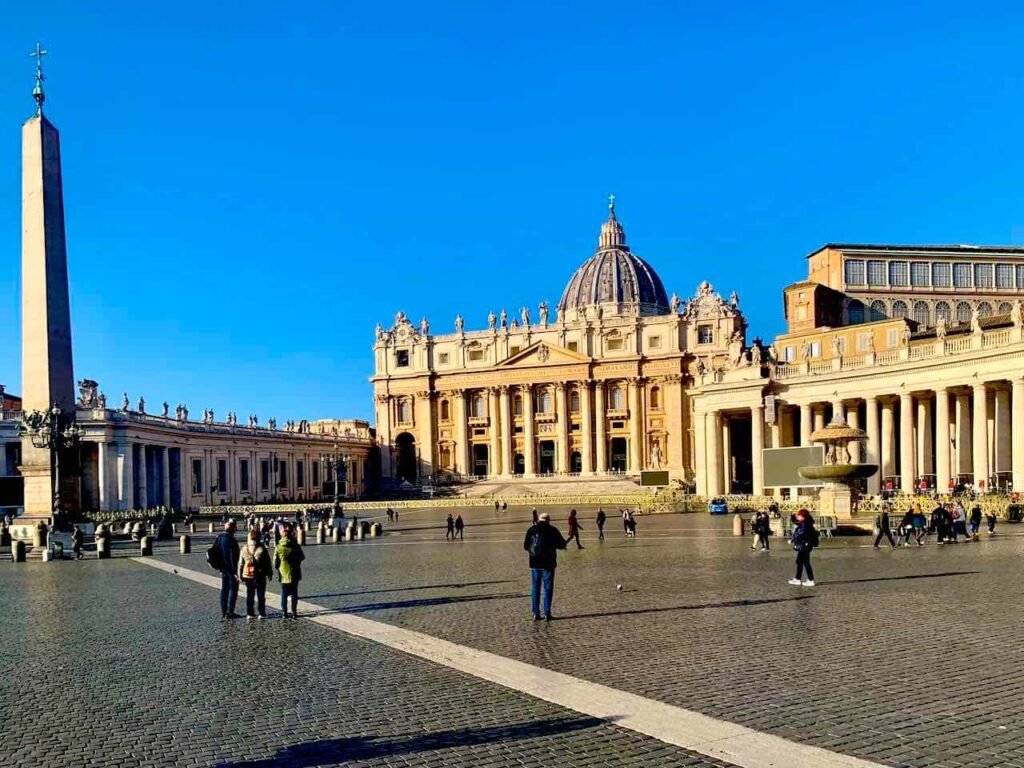
St. Peter’s Square was designed by Gian Lorenzo Bernini between 1656 and 1667 to welcome pilgrims arriving at the Basilica. The square is framed by two semi-circular colonnades made up of 284 Doric columns and 88 pilasters arranged in four rows. At the center stands a 25.5-meter-tall Egyptian obelisk that dates back to the 13th century BC and was brought to Rome in AD 37. The two large fountains—by Carlo Maderno and Bernini—symbolize spiritual purification and symmetry. The square can hold over 300,000 people and is often the site of papal addresses and important Catholic ceremonies.
Tip: Arrive early, especially on Sundays, when the Pope delivers his weekly blessing from the balcony of St. Peter’s Basilica.
2. St. Peter’s Basilica
St. Peter’s Basilica is one of the most important churches in Catholicism (along with the Church of the Holy Sepulcher in Jerusalem). It was built over what is believed to be the tomb of Saint Peter, one of Jesus’ apostles. Construction began in 1506 under Pope Julius II and was completed in 1626 with contributions from architects like Bramante, Michelangelo, and Bernini. The basilica covers over 22,000 square meters and has a capacity for around 60,000 worshippers. Inside, it houses Michelangelo’s La Pietà, Bernini’s Baldachin over the papal altar, and countless chapels and sculptures. The dome, designed by Michelangelo, rises to 136 meters (446 feet) and offers panoramic views of Rome.
Tip: Visit the Dome early to avoid long lines, and don’t miss the Vatican Grottoes, the final resting place of many popes. Be prepared for the long queues, security checks, and metal detectors. Consider taking this tour of St Peter’s Basilica, Papal Tombs, and Dome Climb.
3. The Vatican Museums
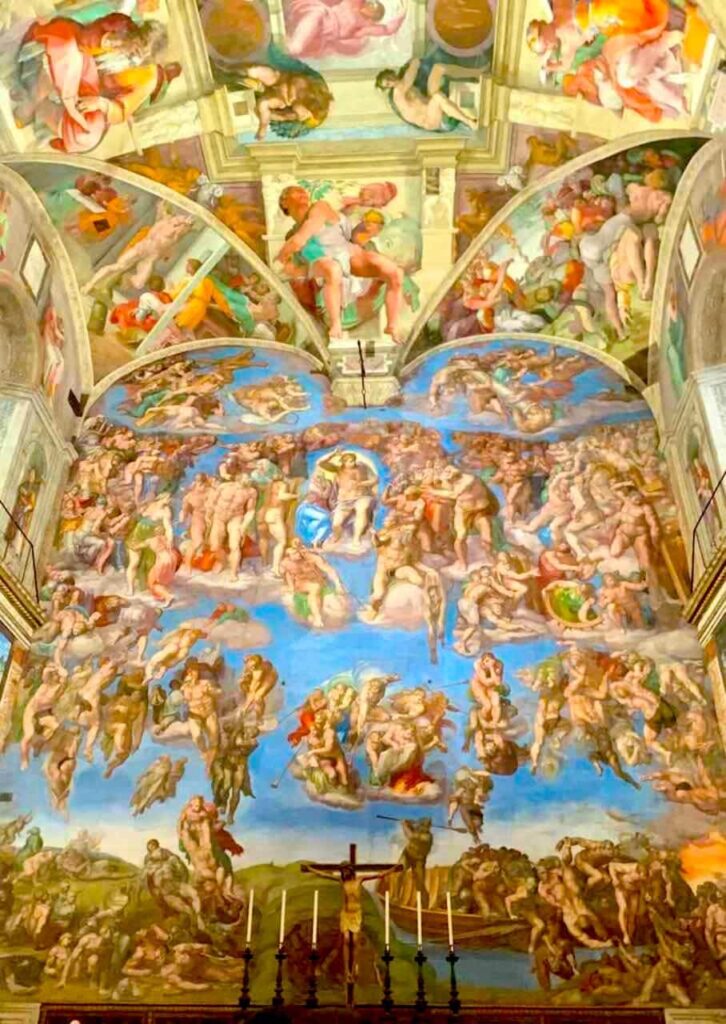
The Vatican Museums were founded by Pope Julius II in the early 16th century and now include 54 galleries housing one of the world’s most important art collections. With over 70,000 works, including masterpieces by Raphael, Caravaggio, and Leonardo da Vinci, the museums stretch for about 9 miles of exhibits. Key highlights include the Raphael Rooms, the Gallery of Maps, and the Pio-Clementine Museum with ancient sculptures. The museum receives more than 6 million visitors annually, making it one of the most visited museums globally. The tour culminates in the Sistine Chapel, home to Michelangelo’s ceiling and The Last Judgment.
Tip: Book a guided tour to skip the long lines and get deeper insights into the art. Otherwise, get the Vatican Museums & Sistine Chapel Entrance Ticket in advance and tour them on your own.
4. The Vatican Gardens
The Vatican Gardens cover about 23 hectares (57 acres), making up nearly half of Vatican City’s territory. These gardens were established during the Renaissance and Baroque periods and are filled with fountains, sculptures, and exotic plants. Access is limited and only available via guided tours, which must be booked in advance and are often combined with Vatican Museum tickets. The gardens offer views of St. Peter’s Dome and hidden corners rarely seen by most visitors. They are also used by the Pope for moments of reflection and private prayer, making them one of the most tranquil spots in Vatican City.

5. The Vatican Grottoes
Located beneath St. Peter’s Basilica, the Vatican Grottoes are a series of underground chapels and tombs that serve as the final resting place for over 90 popes. The grottoes include the tombs of significant religious figures, monarchs, and even Queen Christina of Sweden, who abdicated her throne and converted to Catholicism. Access is included with your visit to the basilica and requires going through security. One of the grottoes’ most important features is its proximity to the Tomb of St. Peter, although the actual tomb lies deeper in the necropolis below. The atmosphere is quiet and reverent, inviting visitors to reflect and pray.
PS: Taking photos is not allowed in the Vatican Grottes. Sorry, no photos here.
Tip: To truly connect with the history of the Vatican, take this guided tour.
6. The Tomb of St. Peter (Scavi Tour)
The Scavi Tour offers exclusive access to the ancient necropolis beneath St. Peter’s Basilica, including the believed tomb of St. Peter, one of Jesus’ twelve apostles. This archaeological area was discovered in the 1940s and includes pagan and early Christian graves dating back to the 1st century. The tour is restricted to just 250 visitors per day and must be reserved well in advance through the Vatican Excavations Office. The tour lasts about 1 hour and is led by trained guides who explain the complex layers of history and burial customs. Seeing the site where the presumed bones of St. Peter lie is a profound spiritual experience for many Christian pilgrims. Check out the Scavi Tour here.
PS: Photography is not allowed during the Scavi tour.
A Perfect One-Day Vatican Pilgrimage Itinerary
If you have just one day, here’s how to make the most of it.
Morning (9:00 AM – 11:30 AM): Vatican Museums & Sistine Chapel
Begin your Vatican experience with a visit to the world-famous Vatican Museums, home to one of the most extensive and impressive art collections on the planet. Spanning over 9 miles of galleries, the museums house centuries of artistic and cultural treasures collected by the papacy.
Start your exploration in the Raphael Rooms, where the Renaissance master’s vivid frescoes—including The School of Athens—showcase his artistic brilliance. Continue on to the crown jewel of the collection: the Sistine Chapel. Here, Michelangelo’s iconic ceiling frescoes, like The Creation of Adam and The Last Judgment, offer a breathtaking encounter with one of art history’s most celebrated masterpieces.
Tip: Consider booking skip-the-line tickets or joining a guided tour to avoid long entry lines. Expert guides provide fascinating insights into the art and its historical context, enriching your experience.
Allow 2 to 3 hours for your visit. Starting your Vatican itinerary with the Museums is ideal, as it sets the stage for the spiritual and architectural wonders that follow.
Noon (12:00 PM – 1:30 PM): Lunch Near St. Peter’s Square
Just outside the Vatican walls are several local trattorias and ristorantes popular with both tourists and locals. One of the most visited spots is Ristorante dei Musei, known for its authentic Roman cuisine and proximity to the Vatican entrance. Classic Roman dishes such as Cacio e Pepe (cheese and pepper pasta) and Saltimbocca alla Romana (veal with prosciutto and sage) are menu staples. Affordable lunch offers, including a pasta, drink, and dessert, are between €12 and €18. Dining here also gives you a chance to recharge and reflect before continuing your Vatican visit.

Afternoon (1:45 PM – 2:15 PM): Reflect in St. Peter’s Square
After enjoying a meal or quick refreshment, make your way directly to St. Peter’s Square, the grand entrance to Vatican City. Stand at the central point of the square and take in the awe-inspiring colonnades—masterfully designed by Gian Lorenzo Bernini to symbolize open arms, welcoming pilgrims from around the world.
At the heart of the square, you’ll find a striking Egyptian obelisk, flanked by two elegant fountains, which together create a harmonious and contemplative atmosphere. This is an ideal location to pause, reflect, and absorb the peaceful spirit of one of Christianity’s most sacred sites.
Afternoon (2:30 PM – 5:00 PM): St. Peter’s Basilica, Grottoes & Dome Climb
Step inside St. Peter’s Basilica, a masterpiece of Renaissance architecture and one of the largest churches in the world. As you enter, make your way to Michelangelo’s La Pietà—a breathtaking sculpture that captures both grace and sorrow with extraordinary detail.
Next, descend into the Vatican Grottoes, where the Papal Tombs are located. Here, you can pay your respects to about 91 past pontiffs.
For a truly unforgettable experience, ascend to the top of St. Peter’s Dome. The climb begins with an elevator ride that takes you partway up, followed by a challenging staircase of approximately 300 steps. At the summit, you’ll be rewarded with a 360-degree panoramic view of Rome and a stunning perspective of St. Peter’s Square below.
Tip: The dome climb is a bit strenuous, so bring water and wear comfortable shoes. You can explore these sites independently or join a guided tour (duration: 2.5 hours, cost: €30).
Evening (7:00 PM – 9:00 PM): Dinner Near the Vatican
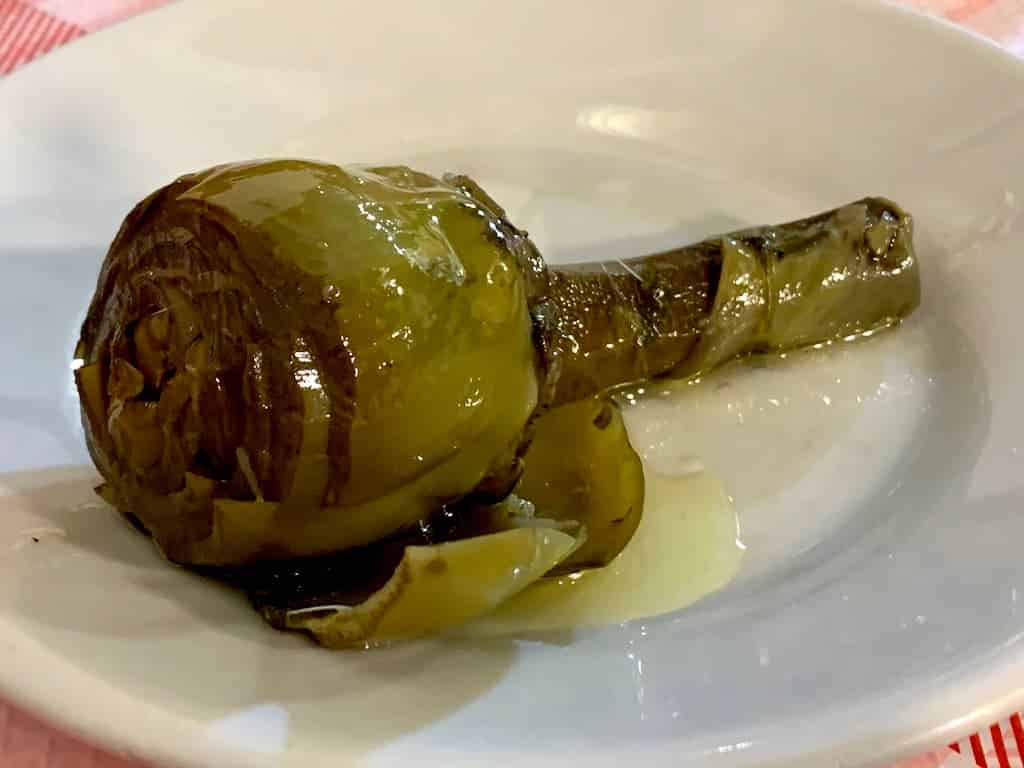
After sunset, head to Ristorante La Vittoria, just a short walk from St. Peter’s Square, for a relaxed Roman dinner. The restaurant offers traditional fare like Coda alla Vaccinara (oxtail stew) and Carciofi alla Romana (braised Roman-style artichokes). Most Vatican-area restaurants close around 10:00–11:00 PM, giving visitors ample time for a leisurely evening meal. The surrounding Borgo Pio neighborhood offers a quieter, more authentic Roman atmosphere in contrast to the day’s crowds. Dining here gives pilgrims and travelers alike a peaceful end to a spiritually rich day.
Where to Stay Near the Vatican
- Hotel Sant’Angelo: A cozy boutique option, 20 minutes away on foot.
- Vatican View : Just steps from the Basilica with unbeatable views.
Practical Tips for Your Pilgrimage to the Vatican
- Dress Modestly: Shoulders and knees must be covered in all sacred spaces.
- Book in Advance: Especially for museums (guided tour/skip the line ticket) and the Scavi Tour.
- Wear Comfortable Shoes: There’s a lot of walking.
- Be Respectful: Silence is expected in places like the Sistine Chapel and Grottoes.
- Start Early: Especially if you’re hoping to attend a Papal Mass or avoid long lines.
Ready to take your own pilgrimage to the Vatican? Pack comfortable shoes, an open heart, and let this little city change you in big ways.
YOU MIGHT ALSO ENJOY:


